IPv4 vs IPv6 Proxy for Web Scraping: Complete Compatibility Guide 2025
Understanding the differences between IPv4 vs IPv6 proxy configurations becomes critical when planning large-scale web scraping operations in 2025. The choice between these two internet protocol versions significantly impacts scraping performance, target website compatibility, proxy costs, and detection risks. While IPv4 proxies dominate the current proxy market with widespread compatibility across virtually all websites, IPv6 proxies offer cost advantages and larger address pools that benefit high-volume data extraction projects requiring thousands of unique IP addresses.
Web scraping professionals face complex decisions when selecting between IPv4 vs IPv6 proxy infrastructure for their data collection pipelines. IPv4’s 32-bit address space provides approximately 4.3 billion unique addresses, with most commercially available proxy services operating on this established protocol. Conversely, IPv6’s 128-bit addressing enables virtually unlimited IP addresses (340 undecillion), creating opportunities for rotating IP pools that minimize detection while scraping rate-limited websites. However, IPv6 adoption remains incomplete across the internet, creating compatibility challenges that affect scraping success rates.
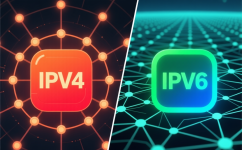
IPv4 vs IPv6 Proxy: Key Differences
IPv4 Proxies
32-bit Address Space
- Universal compatibility with 99.9% of all websites and services
- 4.3 billion unique addressesLimited Pool
- Higher pricing due to address scarcity ($2-8 per IP monthly)
- Established infrastructure with mature proxy services
- Better for scraping mainstream websites and e-commerce platforms
- Residential and datacenter options widely available
- NAT traversal complications in some configurations
- Standard format: 192.168.1.1 (four octets)
IPv6 Proxies
128-bit Address Space
- Growing compatibility at 40-50% of major websites in 2025
- 340 undecillion addressesUnlimited
- Significantly cheaper ($0.50-2 per IP monthly)
- Ideal for high-volume scraping with IP rotation needs
- Requires dual-stack configuration for complete coverage
- Simplified routing without NAT requirements
- Lower detection risk due to massive address space
- Standard format: 2001:0db8:85a3::8a2e:0370:7334
The Internet Protocol evolution from IPv4 to IPv6 occurred due to address exhaustion concerns, but adoption rates vary dramatically across different geographic regions and hosting providers. For web scraping operations, this creates a strategic decision point: IPv4 proxies guarantee maximum compatibility but impose cost constraints for large-scale operations, while IPv6 proxies dramatically reduce expenses but require careful target website compatibility verification before deployment.
Understanding IPv4 vs IPv6 Proxy Compatibility for Web Scraping
Website compatibility represents the most critical factor when choosing between IPv4 and IPv6 proxies for web scraping projects. As of 2025, approximately 40-45% of top Alexa-ranked websites support IPv6 connections, with adoption rates higher among tech companies, content delivery networks, and cloud services. Major platforms like Google, Facebook, Netflix, and Wikipedia fully support IPv6, while many e-commerce sites, regional businesses, and older web applications remain IPv4-only.
Testing target website IPv6 compatibility before committing to proxy infrastructure prevents costly deployment failures. Simple compatibility checks involve attempting direct IPv6 connections to target domains or using online IPv6 testing tools. However, comprehensive scraping operations require systematic compatibility audits across all target websites, documenting which sites support IPv6, which require IPv4, and which allow dual-stack connections enabling fallback options.
How to Test IPv4 vs IPv6 Proxy Compatibility
Command-Line Testing
Test IPv4 connectivity:
curl -4 -I http://target-website.com
Test IPv6 connectivity:
curl -6 -I http://target-website.com
If IPv6 test fails with “Network unreachable,” the website doesn’t support IPv6 connections.
Python Compatibility Check
Automated testing script:
import socket
try:
    socket.create_connection(
        ("target.com", 80),
        timeout=5,
        family=socket.AF_INET6
    )
    print("IPv6 supported")
except: print("IPv6 not supported")
Run this for each target website in your scraping list to build compatibility matrix.
DNS Record Verification
Check for AAAA records (IPv6):
dig AAAA target-website.com +short
Check for A records (IPv4):
dig A target-website.com +short
Presence of AAAA records indicates IPv6 support, but doesn’t guarantee functional connectivity.
Proxy Verification
Test through proxy:
curl -x [proxy_ip:port] -6 http://ipv6.whatismyipaddress.com
Use proxy checker tools to verify both IPv4 and IPv6 proxy functionality before deployment.
⚠️ Important: Always test compatibility with actual proxy connections under realistic scraping conditions. DNS records and ping tests don’t guarantee successful web scraping through proxies due to firewalls, rate limiting, and proxy-specific restrictions.
Cost Analysis: IPv4 vs IPv6 Proxy Pricing for Web Scraping
Proxy costs represent a significant operational expense for large-scale web scraping operations, with pricing structures varying dramatically between IPv4 and IPv6 infrastructure. IPv4 proxy prices reflect address scarcity, with residential IPv4 proxies typically costing $8-15 per GB for traffic-based billing or $3-8 per IP for dedicated monthly allocations. Datacenter IPv4 proxies offer more affordable alternatives at $1-3 per IP monthly but carry higher detection risks for sensitive scraping targets.
IPv6 proxies provide substantial cost savings, with pricing typically 60-80% lower than IPv4 equivalents. Major providers like Bright Data offer IPv6 residential proxies at $4-7 per GB (compared to $10-15 for IPv4), while datacenter IPv6 proxies cost $0.50-1.50 per IP monthly. For operations requiring thousands of rotating IPs, these savings compound significantly—a 10,000 IP pool costs approximately $30,000-80,000 monthly for IPv4 versus $5,000-15,000 for IPv6.
Implementing Dual-Stack IPv4 vs IPv6 Proxy Strategy
Smart web scraping architectures implement dual-stack proxy configurations that leverage both IPv4 and IPv6 infrastructure based on target website compatibility. This hybrid approach maximizes cost efficiency while maintaining universal compatibility—using IPv6 proxies for supported websites and automatically falling back to IPv4 for legacy sites. Modern scraping frameworks like Scrapy, Playwright, and Selenium support dual-stack configurations through proper proxy rotation logic.
Implementing dual-stack proxy systems requires careful architecture planning and compatibility mapping. Build a database of target websites categorized by IPv6 support status, then route scraping requests through appropriate proxy pools. For example, scrape Google, Facebook, and major CDN-hosted content through cheaper IPv6 proxies while routing regional e-commerce sites, banking portals, and government websites through IPv4 infrastructure. This intelligent routing reduces proxy costs by 40-60% compared to IPv4-only strategies.
Configuration management becomes more complex with dual-stack systems but delivers significant operational benefits. Create separate proxy pools for IPv4 and IPv6, implement automatic failover logic that switches protocols when connection attempts fail, and monitor success rates per protocol to identify compatibility issues. Many commercial proxy providers like Oxylabs ($75/month minimum), Smartproxy ($8.50/GB), and IPRoyal ($7/GB) offer dual-stack support with automatic protocol selection based on target domain compatibility.
Recommended Proxy Providers for Dual-Stack Scraping
Bright Data
- ✓ Both IPv4 and IPv6 support
- ✓ 72M+ residential IPs
- ✓ Auto protocol switching
- ✓ $500+ monthly minimum
Smartproxy
- ✓ IPv4 and IPv6 residential
- ✓ 55M+ IP pool
- ✓ City/state targeting
- ✓ No minimum commitment
IPRoyal
- ✓ IPv6-first approach
- ✓ 2M+ residential pool
- ✓ Unlimited bandwidth plans
- ✓ Great for testing
💡 Pro Tip: Testing Before Commitment
Before purchasing large proxy pools, test both IPv4 and IPv6 connectivity with your target websites using trial accounts or small packages. Many scraping projects discover that 60-70% of their targets support IPv6, enabling significant cost savings. Start with mixed pools and analyze success rates to optimize your IPv4/IPv6 ratio.
Performance Comparison: IPv4 vs IPv6 Proxy Speed and Reliability
Network performance characteristics differ between IPv4 and IPv6 proxies, impacting scraping throughput and reliability. IPv6’s simplified header structure theoretically enables faster packet processing, but real-world performance depends more on routing infrastructure maturity and provider network quality. Testing shows minimal latency differences (typically 5-15ms) between IPv4 and IPv6 proxies when connecting to dual-stack websites, making protocol choice primarily a compatibility and cost decision rather than performance consideration.
Connection reliability becomes critical for large-scale scraping operations running 24/7. IPv4 infrastructure benefits from decades of optimization, redundant routing paths, and universal ISP support. IPv6 connectivity may experience intermittent issues in regions with incomplete IPv6 deployment or when routing through networks with IPv6 transition mechanisms like 6to4 tunneling or NAT64. Implement robust retry logic and protocol fallback mechanisms to handle these reliability variations automatically.
Detection rates represent another performance consideration often overlooked in IPv4 vs IPv6 proxy comparisons. IPv6’s massive address space (340 undecillion addresses) provides natural protection against IP-based blocking that plagues IPv4 operations. Rotating through IPv6 addresses creates unique identities that are mathematically impossible for websites to preemptively block, unlike IPv4 where proxy ranges often appear on shared blacklists. This advantage makes IPv6 particularly valuable for scraping sophisticated targets with advanced bot detection systems.
IPv4 vs IPv6 Proxy: FAQ
Use IPv4 proxies for e-commerce scraping to ensure maximum compatibility with all product pages, checkout flows, and regional marketplace variants. While major platforms like Amazon, eBay, and Alibaba support IPv6, many smaller retailers and regional e-commerce sites remain IPv4-only. E-commerce scraping also benefits from residential IPv4 proxies that appear more trustworthy to anti-bot systems. Budget-conscious operations can implement dual-stack systems testing IPv6 first and falling back to IPv4 when connections fail, potentially saving 40-50% on proxy costs while maintaining reliability.
IPv6 proxies cost less due to virtually unlimited address availability eliminating scarcity economics that drive IPv4 pricing. IPv4’s 4.3 billion addresses have been exhausted since 2011, creating a secondary market where IP addresses trade for $25-50 each. IPv6 provides 340 undecillion addresses (3.4×10³⁸), making individual addresses economically worthless. Proxy providers pass these savings to customers, offering IPv6 at 60-85% discounts versus IPv4. Infrastructure costs also favor IPv6—no NAT overhead, simpler routing, and lower administrative complexity. However, limited adoption means smaller market demand, keeping prices low despite operational advantages.
Yes, mixing IPv4 and IPv6 proxies through intelligent routing logic optimizes both cost and compatibility. Implement protocol selection based on target website compatibility—maintain a database mapping domains to supported protocols and route requests accordingly. Modern scraping frameworks support dual-stack configurations with automatic failover. For example, configure Scrapy to attempt IPv6 connections first (cheaper), automatically falling back to IPv4 when connections timeout. This hybrid approach typically reduces proxy expenses by 45-60% compared to IPv4-only infrastructure while maintaining near-100% success rates across all target websites regardless of IPv6 support.
IPv6 proxies actually offer superior detection resistance due to the massive address space making IP-based blocking impractical. With 340 undecillion addresses, websites cannot maintain meaningful IPv6 blacklists like they do for suspicious IPv4 ranges. Each rotated IPv6 address is statistically unique and likely never seen before by target websites. However, IPv6 connections may trigger scrutiny on IPv4-primary sites where IPv6 traffic represents <5% of requests. Implement proper browser fingerprinting, user-agent rotation, and request timing regardless of protocol. Detection depends more on behavioral patterns than protocol choice—poor scraping practices get blocked on both IPv4 and IPv6.
Test IPv6 compatibility using command-line tools, Python scripts, or browser developer tools before committing to proxy purchases. Quick verification: curl -6 target-website.com (returns content if IPv6 works, errors if unsupported). For comprehensive testing, write Python scripts checking socket.AF_INET6 connectivity to all target domains. Examine DNS records with dig AAAA target-website.com—presence of AAAA records indicates IPv6 support but doesn’t guarantee functional scraping. Most importantly, test with actual IPv6 proxy connections under realistic scraping conditions including headers, authentication, and rate limiting. Free IPv6 proxy trials from providers enable real-world validation before purchasing.
Approximately 40-45% of top Alexa-ranked websites support IPv6 as of 2025, with significant regional and sector variations. Tech companies, CDN-hosted content, and major platforms (Google, Facebook, Netflix, Wikipedia, GitHub) fully support IPv6. E-commerce, banking, government, and regional businesses show slower adoption at 25-35% IPv6 support. Geographic disparities exist—Europe leads at 55% adoption, North America reaches 50%, while Asia-Pacific averages 35-40%. For web scraping, evaluate your specific target list rather than relying on global statistics. Create a compatibility matrix testing each domain, as even large sites may have IPv4-only subdomains or APIs.
Most modern scraping frameworks support IPv6 proxies, but configuration requirements vary by tool. Scrapy, Beautiful Soup, Selenium, Puppeteer, and Playwright all handle IPv6 when properly configured with dual-stack system settings. Python’s requests library supports IPv6 natively. However, some older tools or custom scripts may require explicit IPv6 configuration through socket.AF_INET6 specifications. Cloud scraping services and commercial tools often abstract protocol details, automatically selecting IPv4/IPv6 based on target compatibility. Test your specific toolchain with IPv6 before production deployment—connection handling, timeout settings, and retry logic may need adjustments for optimal IPv6 performance.
Successfully navigating IPv4 vs IPv6 proxy decisions for web scraping requires balancing compatibility requirements, budget constraints, and performance expectations. While IPv4 maintains universal compatibility advantages justifying premium pricing for compatibility-critical projects, IPv6’s cost benefits and detection resistance make it increasingly attractive for operations targeting modern web infrastructure. Smart scraping architectures implement dual-stack systems that maximize IPv6 usage for supported targets while maintaining IPv4 fallback capabilities, achieving optimal cost-performance ratios.
The future of web scraping proxy infrastructure trends toward increased IPv6 adoption as website support expands and proxy providers enhance dual-stack capabilities. Forward-thinking scraping operations invest in building IPv6 compatibility into their systems now, positioning themselves to capitalize on continued cost reductions and improved address availability. By understanding protocol differences, testing target compatibility systematically, and implementing intelligent routing logic, scraping professionals can leverage both IPv4 and IPv6 advantages while minimizing their respective limitations.