Mobile Proxies Guide: What Are 4G/5G Proxies and How Do They Work in 2026?
Mobile Proxies Guide: What Are 4G/5G Proxies and How Do They Work in 2025?
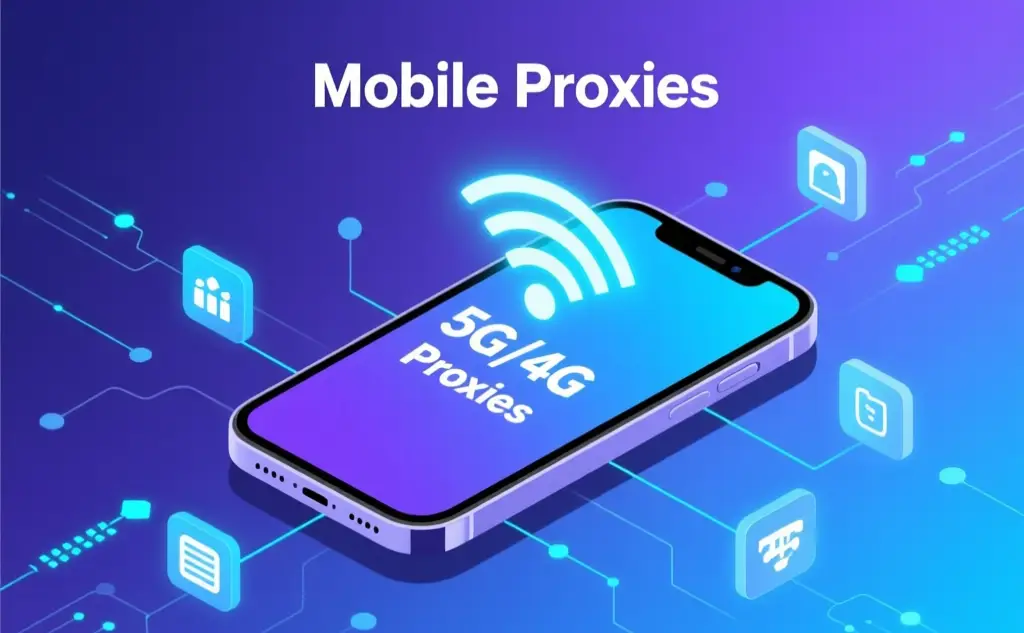
Whether you’re testing mobile applications, managing social media accounts, conducting ad verification on mobile platforms, or accessing mobile-exclusive content, mobile proxies offer unmatched authenticity. Let’s explore how these powerful networking tools leverage 4G and 5G cellular technology to deliver superior performance and reliability.
What Are Mobile Proxies: Understanding 4G/5G Proxy Technology
Mobile proxies explained in simple terms: these are intermediary servers that route your internet traffic through IP addresses assigned by mobile network operators to cellular devices. When you connect through a mobile proxy, websites and applications see an authentic mobile carrier IP address rather than a residential or datacenter IP, making your connection appear identical to someone browsing on their smartphone.
The fundamental difference lies in IP origin and carrier validation. Mobile IPs come directly from cellular network infrastructure operated by major telecommunications companies. These IPs pass through carrier-grade NAT (CGNAT) systems, undergo regular automatic rotation as devices move between cell towers, and carry implicit trust markers that websites recognize as legitimate mobile users.
Mobile proxies represent the pinnacle of proxy authenticity. Social media platforms, banking applications, and mobile-first services trust mobile carrier IPs more than any other connection type, making them virtually undetectable for automation and multi-account operations.
How Mobile Proxies Work: 4G/5G Proxy Architecture
Understanding how mobile proxies work requires examining the sophisticated infrastructure that connects cellular devices to proxy networks. The architecture differs significantly from traditional residential or datacenter proxy setups.
The Mobile Proxy Network Infrastructure:
• Connected to 4G/5G cellular networks
• Distributed across geographic locations
• IP validated through cellular infrastructure
• Dynamic allocation via CGNAT
• Gateway routes through mobile device
• Traffic exits via mobile carrier IP
• Data returns through carrier network
• You receive content seamlessly
This architecture ensures every connection carries authentic mobile carrier characteristics including network latency patterns, cellular protocol signatures, and carrier-specific routing behaviors that websites recognize as genuine mobile traffic.
Types of Mobile Proxies: 4G vs 5G and Configuration Options
The mobile proxy market offers several distinct configurations, each optimized for specific use cases and performance requirements:
Speed: 10-50 Mbps typical throughput
Coverage: Nearly universal global availability
Pricing: $10-18 per GB traffic
Best For: Most mobile operations, cost-effective choice
Speed: 100-500+ Mbps in optimal conditions
Coverage: Growing in major cities worldwide
Pricing: $15-25 per GB traffic
Best For: High-bandwidth operations, ultra-low latency needs
Pool Size: Thousands of mobile IPs per provider
Use Case: Web scraping, data collection at scale
Pricing: $12-20 per GB based on rotation frequency
Availability: Limited due to carrier restrictions
Use Case: Account management, persistent sessions
Pricing: $80-150 per IP per month
For users exploring proxy solutions, starting with a free proxy list helps understand basic functionality, though free proxies lack the reliability and mobile carrier authenticity that premium 4G/5G proxies provide.
Mobile Proxy Benefits: Why Choose 4G/5G Over Other Proxy Types
The advantages of mobile IP proxies extend beyond simple IP masking, offering unique benefits that make them the preferred choice for mobile-focused operations:
Why: Carrier-validated IPs with authentic mobile signatures
Result: Zero blocks on mobile platforms including Instagram, TikTok, Snapchat
Pattern: Mimics natural mobile user behavior perfectly
Benefit: No manual rotation needed, organic IP changes
Trust: Mobile platforms prioritize mobile carrier IPs
Access: Bypass restrictions on mobile-exclusive features
Privacy: Your activity blends with thousands of legitimate users
Safety: Impossible to isolate individual user patterns
These benefits justify premium pricing for mobile proxies. Testing proxy quality before commitment becomes essential – using a proxy checker tool helps verify speed, carrier identification, and connection reliability for mobile proxy services.
Real-World Applications: Who Uses Mobile Proxies and Why
Mobile proxies serve specialized use cases where mobile carrier IPs provide distinct advantages over other proxy types:
- Managing multiple Instagram, TikTok, Snapchat accounts
- Automated engagement without triggering security systems
- Mobile app testing across different carrier networks
- Influencer analytics and competitor monitoring
- Verifying mobile ad placements and display accuracy
- Detecting mobile ad fraud and click manipulation
- Testing geotargeted mobile campaigns by location
- Monitoring competitor mobile advertising strategies
- Accessing mobile-first drop platforms like SNKRS
- Bypassing queue systems with mobile carrier IPs
- Running multiple checkout attempts simultaneously
- Avoiding IP bans during high-demand releases
- Testing apps across different carrier networks
- Verifying geolocation features and regional content
- Quality assurance for mobile-exclusive functionality
- Performance testing under real carrier conditions
- Accessing mobile banking apps securely
- Testing financial services across regions
- Monitoring mobile payment fraud detection
- Verifying mobile transaction processing
- Collecting mobile-specific search results
- Monitoring mobile app store rankings
- Analyzing mobile user experience variations
- Gathering mobile-exclusive pricing data
Mobile Proxy Pricing: Understanding 4G/5G Proxy Costs in 2025
Mobile Proxy Pricing Structure
Mobile proxies command premium pricing due to hardware requirements and carrier costs, but offer unmatched performance
Typical Mobile Proxy Packages
Choosing the Right Mobile Proxy Provider
Selecting a mobile proxy provider requires careful evaluation of factors beyond pricing, focusing on network quality and carrier partnerships:
Critical Comparison Factors
| Feature | Why It Matters | What to Look For |
|---|---|---|
| Physical Device Infrastructure | Real devices ensure authenticity | Providers using actual mobile devices with SIM cards |
| Carrier Diversity | Avoid single-carrier limitations | Access to multiple major carriers per country |
| API Integration | Automation and scalability | RESTful API, rotation control, usage monitoring |
| Geographic Targeting | Region-specific access | Country, city, and carrier-level targeting |
| Protocol Support | Application compatibility | HTTP/HTTPS, SOCKS5, authentication methods |
| Customer Support | Technical issue resolution | 24/7 availability, mobile expertise, response time |
Mobile Proxies vs Residential vs Datacenter: The Comparison
Understanding how mobile proxies compare to other proxy types helps determine the right solution for your specific requirements:
Detection: Virtually impossible (0.01% rate)
Speed: 4G: 10-50 Mbps | 5G: 100-500+ Mbps
Cost: Premium ($10-35 per GB)
Best For: Mobile platforms, social media, mobile apps
Detection: Very low (0.1% rate)
Speed: Moderate (1-3 second latency)
Cost: High ($7-25 per GB)
Best For: General web scraping, e-commerce
Detection: Easily detected (15-30% rate)
Speed: Very fast (100-500ms latency)
Cost: Low ($1-3 per IP/month)
Best For: High-speed bulk operations
Mobile proxies excel when working with mobile-first platforms that heavily scrutinize connection sources. For mobile app automation, social media management, and mobile ad verification, the premium cost justifies the superior success rates and reduced risk.
Setting Up Mobile Proxies: Configuration Guide
Configuring mobile proxies follows similar principles to other proxy types, with some mobile-specific considerations:
Step-by-Step Setup Process:
- Provider Selection: Choose a mobile proxy provider based on your carrier needs, geographic requirements, and budget. Most offer trial packages starting at 3-5GB.
- Account Configuration: Set up authentication credentials. Mobile proxies typically use username/password format:
username-carrier-tmobile-country-us:password - Endpoint Connection: Providers supply gateway addresses (e.g.,
mobile.provider.com:8000) with appropriate ports. HTTP/HTTPS typically use port 8000-8080. - Rotation Settings: Configure IP rotation preferences – automatic rotation per request, timed intervals (5-30 minutes), or sticky sessions for persistent IPs.
- Testing and Verification: Verify mobile carrier detection using online tools. Confirm your visible IP changes correctly and shows target mobile carrier.
Integration Examples:
proxies = {"http": "http://user:pass@mobile-gateway:8000", "https": "http://user:pass@mobile-gateway:8000"}response = requests.get(url, proxies=proxies)Common Challenges with Mobile Proxies and Solutions
While mobile proxies offer superior performance, users occasionally encounter specific challenges related to cellular network characteristics:
- Cause: Cellular networks experience congestion during peak hours
- Solution: Distribute operations across different time zones
- Alternative: Use 5G proxies for more consistent speeds
- Prevention: Implement retry logic for failed requests
- Cause: Mobile proxies consume more bandwidth than anticipated
- Solution: Optimize request patterns and implement caching
- Monitoring: Track bandwidth per operation type closely
- Alternative: Use residential proxies for non-mobile specific tasks
- Cause: Carrier CGNAT systems rotate IPs automatically
- Solution: Use sticky sessions with 15-30 minute persistence
- Configuration: Request static mobile IPs for critical operations
- Alternative: Build IP change tolerance into applications
- Cause: 5G availability concentrated in major cities only
- Solution: Fall back to 4G for broader geographic coverage
- Verification: Check provider coverage maps before purchase
- Planning: Align proxy selection with target audience location
The Future of Mobile Proxies: 5G Expansion and Beyond
The mobile proxy landscape continues evolving rapidly, driven by 5G expansion and advancing mobile technologies:
Legal and Ethical Considerations for Mobile Proxy Use
Mobile proxy usage carries the same legal considerations as other proxy types, with additional factors related to mobile platforms:
FAQ: Frequently Asked Questions About Mobile Proxies
Mobile proxies offer superior legitimacy on mobile-first platforms like Instagram, TikTok, and Snapchat because they use actual mobile carrier IPs. Mobile platforms trust carrier-validated connections more than residential IPs. Additionally, mobile proxies benefit from carrier CGNAT systems where thousands of users share IP pools, making individual activity virtually untraceable.
5G proxies justify premium pricing for bandwidth-intensive operations like video streaming, large file transfers, or real-time data collection. For typical social media management or mobile app testing, 4G proxies deliver adequate performance at lower cost. Choose 5G when ultra-low latency (<20ms) or speeds exceeding 100 Mbps matter for your specific use case.
Detection is extremely difficult because mobile proxies use legitimate carrier IPs identical to regular mobile users. However, behavioral patterns, request timing, and browser fingerprinting can still identify automation regardless of IP legitimacy. Combine quality mobile proxies with proper automation practices that mimic human behavior for best results.
Light usage (5-10 accounts, basic engagement) requires 3-10GB monthly. Medium operations (20-50 accounts, regular posting) need 20-50GB. Heavy automation (100+ accounts, story viewing, video uploads) consumes 100-300GB monthly. Monitor initial usage to establish accurate requirements for your specific activities.
Mobile proxies work with most mobile applications that respect standard proxy protocols (HTTP/HTTPS/SOCKS5). However, some banking apps and security-sensitive applications implement certificate pinning or advanced security measures that may not function correctly through proxies. Test compatibility before committing to large plans.
Shared mobile proxies allow multiple users to access the same mobile proxy pool simultaneously, offering lower costs but potentially lower speeds during peak usage. Dedicated mobile proxies provide exclusive access to specific mobile devices, ensuring consistent performance but at significantly higher prices ($150-300 per device monthly). Most users find shared mobile proxies sufficient for their needs.