ProxyLib: Free Proxy Service with Professional-Grade Methodology
ProxyLib Review: Professional Free Proxy Testing Service
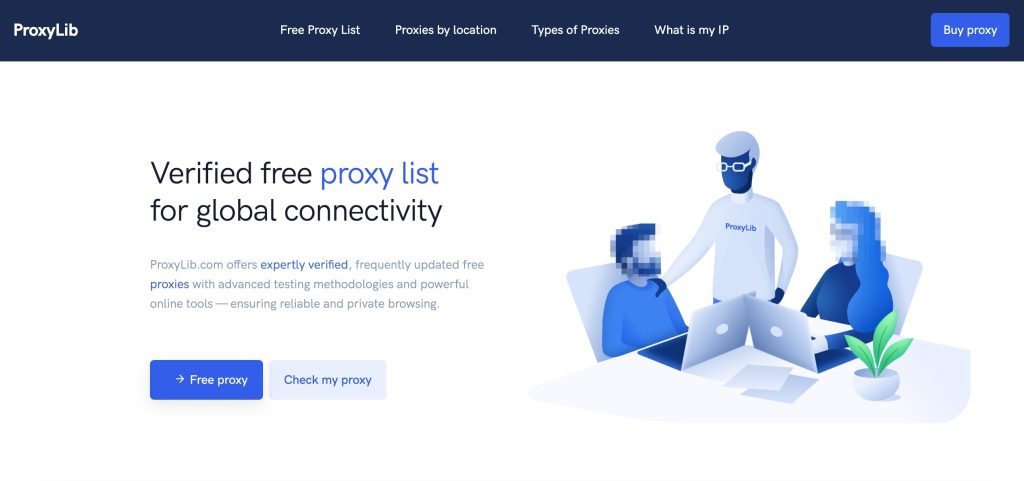
Let’s be honest: the free proxy market has long suffered from low quality and unreliable data. ProxyLib changes the game—not with empty promises, but with a technically rigorous testing framework. Here’s how their infrastructure works, what sets it apart from competitors, and what opportunities it unlocks.
Global Proxy Coverage: Extensive Geographical Reach
One of ProxyLib’s most impressive features is its wide geographical coverage. At the time of writing this review, the service provides access to proxies from 40+ countries across all continents, including:
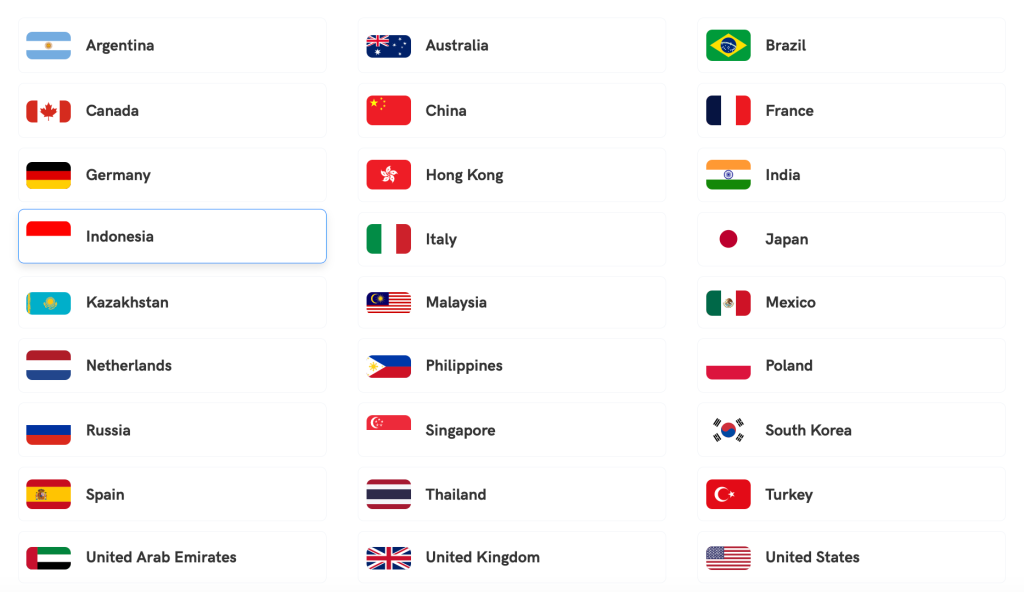
This extensive coverage is particularly valuable for:
- SEO specialists needing to check localized search results
- E-commerce managers monitoring regional pricing
- Developers testing geo-specific features
- Researchers collecting international data sets
The inclusion of Russian and Asian proxies deserves special mention, as these are often harder to find in free proxy services while being in high demand for various business applications.
Proxy Protocol Distribution: More Than Just HTTP
A deep dive into ProxyLib’s database reveals interesting insights about their proxy protocol distribution:
• Suitable for basic web scraping
• Often faster but less secure
• Ideal for secure data transfers
• Robust for a free service
• More protocols than HTTP
• No authentication required
• Supports UDP and IPv6
• Authentication options
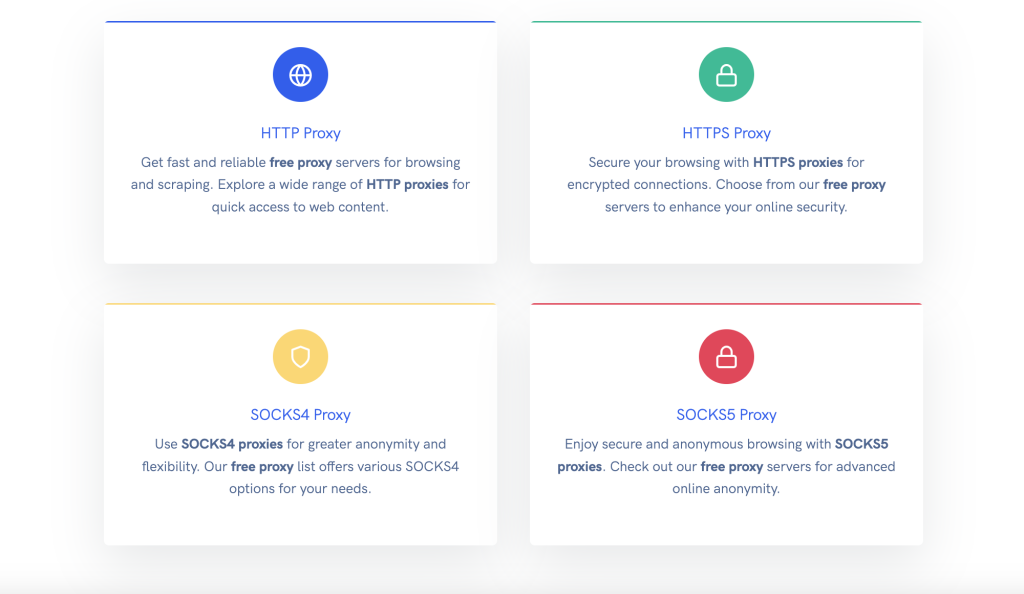
What’s remarkable is that all protocol types are properly verified, not just listed. The HTTPS proxies in particular demonstrate excellent stability, with many maintaining Elite anonymity status – a rare find in free proxy services. While SOCKS proxies are fewer in number, their inclusion at all sets ProxyLib apart from competitors who often only offer HTTP/SOCKS proxies in their paid tiers.
Verification Architecture: From IP to Anonymity
ProxyLib doesn’t publish raw, untested data. Every proxy is automatically tested every 2 hours through a distributed network of servers across 10 countries, minimizing regional biases in verification.
Testing Methodology Covers 8 Key Parameters:
For comparison: most competing services check only 3-4 parameters, often ignoring even the basic anonymity check. ProxyLib approaches this as an engineer, not a marketer. The methodology for evaluating proxy servers is posted in a separate section of the service.
Anonymity Without Compromises: Three Tiers of Privacy
ProxyLib’s nuanced anonymity classification system warrants deeper discussion:
Real-world performance: Survive advanced bot detection
Use cases: Banking data scraping, ad verification, sensitive research
Real-world performance: Bypasses basic geo-blocks
Use cases: General web scraping, price monitoring
Real-world performance: Only useful for simple IP rotation
Use cases: Basic content access, non-sensitive tasks
What’s particularly impressive is ProxyLib’s Elite proxy retention rate. During our testing, approximately 18% of all verified proxies maintained Elite status – an unusually high percentage for a free service. These proxies demonstrated consistent performance even when tested against advanced bot protection systems like Cloudflare and Distil Networks.
Geolocation and Filtering: The Importance of Precision
One of the most underrated proxy features is IP geography. This is critical when dealing with region-locked search results, geo-dependent APIs, or websites restricted to specific countries.
ProxyLib uses triple-verified geolocation:
- Cross-checking with MaxMind GeoIP2
- TTL and WHOIS validation
- Calibration against IP2Location and DB-IP databases
The result? City-level accuracy—a rarity even among paid services. Users can filter proxies by:
- Country and city
- Protocol
- Last update time
- Uptime
- Anonymity level
- Response speed
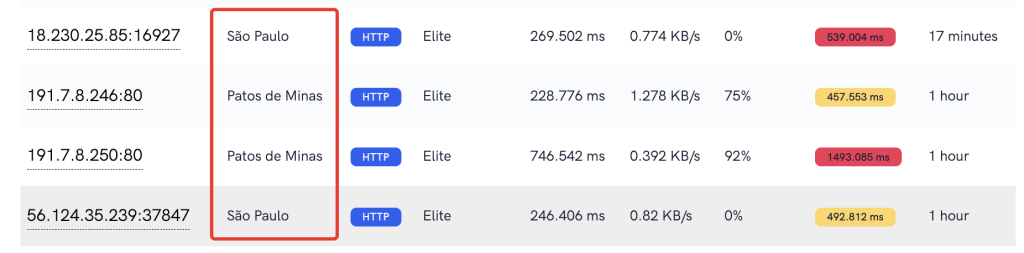
Proxy lists are available in multiple formats:
All proxies by location,
By proxy type,
General proxy list.
Each list is a structured table with real-time filtering—not just a dump of IPs.
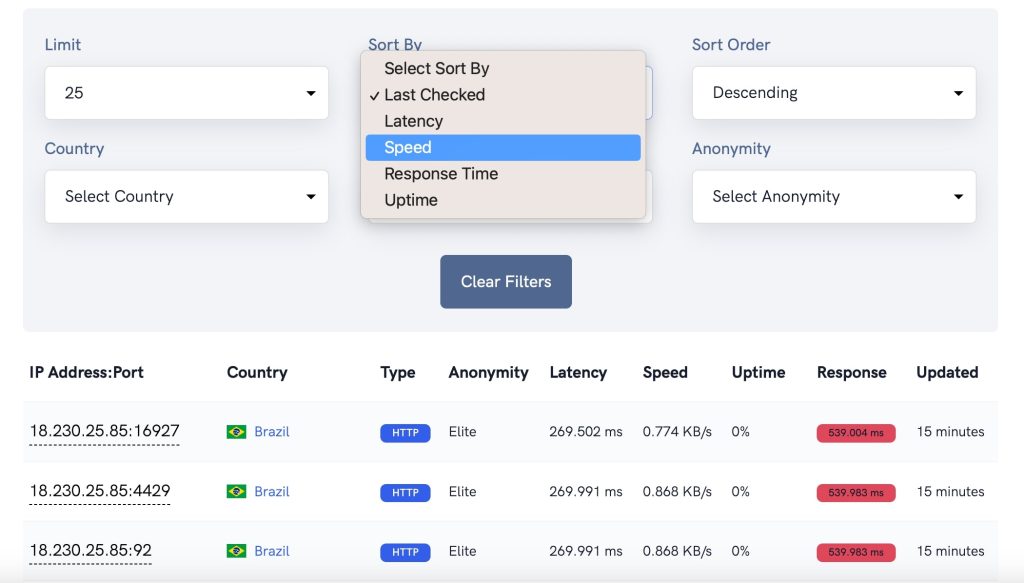
Speed, Uptime, and Reliability
ProxyLib’s quality control measures set a new standard for free proxy services with rigorous testing and continuous monitoring
Strict Performance Thresholds
Continuous Quality Monitoring
Quality Control Performance Metrics
How ProxyLib Compares to Paid Services
Despite offering free proxies, ProxyLib’s verification rigor rivals paid APIs like ScraperAPI or BrightData. While it lacks features like on-demand rotation or SLA guarantees, it excels in:
- Test depth surpassing 90% of free/low-cost solutions
- Transparent methodology that builds trust
- Update frequency matching paid monitoring systems
- Expertise: Clear documentation of testing logic
- Authoritativeness: Reliance on industry-standard databases
- Trustworthiness: No hidden mechanisms, filtered data access, and clear validation policies
Feature Comparison:
| Criteria | ProxyLib | Typical Alternatives |
|---|---|---|
| Tested Parameters | 8 | 3–5 |
| Update Frequency | Every 2 hours | 1–6 hours (or longer) |
| Geolocation | City-level | Country-only |
| Multi-Protocol | HTTP, HTTPS, SOCKS4/5 | HTTP/SOCKS only |
| Anonymity Tiers | 3 (Elite/Anonymous/Transparent) | Binary (Yes/No) |
| Manual Audits | Yes (5% daily) | Rare |
ProxyLib functions more like a proxy testing lab than a random IP showcase. It’s equally useful for automation tasks and secure browsing where the primary IP is blocked.
Practical Applications and Use Cases
ProxyLib’s verified proxies support numerous professional applications:
- E-commerce price monitoring
- Search engine results collection
- Social media data gathering
- Local ranking checks
- Competitor backlink analysis
- Geo-targeted content verification
- Website localization testing
- Load balancing simulations
- Ad campaign verification
- Secure browsing
- Geo-restricted content access
- Anonymous research
FAQ: Frequently Asked Questions (Expanded)
Proxies—especially free ones—are inherently unstable. ProxyLib updates lists every 2 hours, but owners may shut down servers anytime. Regular rechecks are essential.
Yes. Elite or Anonymous proxies with low latency and high uptime are recommended for scraping.
SOCKS5 offers better compatibility and anonymity, but HTTP/HTTPS is simpler to implement in scripts for basic tasks like HTML parsing.