Sticky Sessions vs Rotating Proxies for E-commerce Scraping: Complete Guide
Choosing between sticky sessions vs rotating proxies for e-commerce scraping represents one of the most critical decisions affecting your data collection success rates and operational efficiency. E-commerce websites implement sophisticated anti-scraping mechanisms that detect and block automated access attempts, making proper proxy configuration essential for maintaining reliable access to product data, pricing information, and inventory levels. Understanding when to use sticky sessions versus rotating proxies enables you to optimize scraping performance while minimizing detection risks and infrastructure costs throughout your data collection operations.
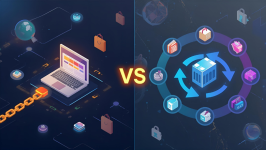
The fundamental difference between sticky sessions and rotating proxies lies in how they maintain connections with target websites. Sticky sessions maintain consistent IP addresses for extended periods, creating persistent connections that mimic natural browsing behavior. Rotating proxies automatically change IP addresses after each request or at defined intervals, distributing requests across multiple endpoints to avoid detection patterns. Both approaches offer distinct advantages depending on your specific e-commerce scraping requirements, target website characteristics, and data collection volume needs.
Proxy Session Strategies for E-commerce
Understanding the fundamental differences between persistent and dynamic proxy approaches
Sticky Sessions
Maintain consistent IP addresses throughout scraping sessions, creating persistent connections that closely mimic human browsing patterns and enable stateful interactions.
- Same IP address maintained for duration of session (10-30 minutes typical)
- Preserves cookies, authentication tokens, and session state
- Ideal for multi-step workflows requiring login or cart interactions
- Reduces connection overhead with persistent TCP connections
- Better for websites with aggressive session tracking
- Lower request volume but higher per-IP exposure risk
Rotating Proxies
Automatically switch IP addresses between requests or at defined intervals, distributing load across extensive proxy pools to minimize detection and maximize request throughput.
- New IP address for each request or after time interval
- Distributes requests across thousands of endpoints
- Minimizes per-IP request volume for stealth
- Ideal for high-volume product catalog scraping
- Reduces individual IP ban risk significantly
- Requires stateless operations without session dependencies
Modern e-commerce platforms employ advanced detection systems that analyze request patterns, session behavior, and IP reputation to identify automated access attempts. Bot management systems examine hundreds of signals including request timing, browser fingerprints, mouse movements, and navigation patterns. The choice between sticky sessions vs rotating proxies directly impacts how effectively your scraping infrastructure evades these detection mechanisms while maintaining efficient data collection operations.
Before implementing either proxy strategy, you must assess your specific e-commerce scraping requirements. Consider target website characteristics, required data freshness, scraping volume, whether authentication is needed, session state requirements, and budget constraints. These factors determine which approach delivers optimal results for your use case. Many sophisticated scraping operations employ hybrid strategies that combine both sticky sessions and rotating proxies based on specific scraping task requirements.
How to Implement Sticky Sessions for E-commerce Scraping
Implementing sticky sessions requires selecting proxy providers that support session persistence features. Premium residential proxy services like Bright Data ($8.40/GB), Oxylabs ($8/GB), and SmartProxy ($8.50/GB) offer dedicated sticky session capabilities with configurable session durations. These providers maintain consistent IP assignments through session tokens or cookies that your scraping application includes with each request, ensuring routing through the same exit node.
Step-by-Step: Setting Up Sticky Sessions
Choose a Sticky Session Proxy Provider
Select providers offering residential proxies with explicit sticky session support. Key considerations include session duration flexibility (5-30 minutes), IP pool size for rotation variety, geographic targeting capabilities, and pricing models. Evaluate trial periods to test compatibility with your target e-commerce sites.
Recommended Providers:
- Bright Data: $8.40/GB, 30-minute sessions, 72M+ IPs
- Oxylabs: $8/GB starting, custom session lengths, enterprise features
- SmartProxy: $8.50/GB, 10-minute default sessions, easy integration
- NetNut: $12/GB, ISP proxies with 10-minute persistence
Configure Session Persistence Parameters
Set up session identifiers that maintain IP consistency. Most providers use session IDs embedded in proxy URLs or authentication headers. Configure optimal session duration based on your scraping workflow—longer sessions for multi-page product scraping, shorter for simple data extraction.
# Python example with session ID

proxy_url = "http://session-{session_id}:{password}@proxy.provider.com:port"

session_id = "abc123xyz"  # Maintain for duration

proxies = {"http": proxy_url, "https": proxy_url}


# All requests use same session/IP

response1 = requests.get(url1, proxies=proxies)

response2 = requests.get(url2, proxies=proxies)
Implement Cookie and State Management
Sticky sessions excel at maintaining authentication state across multiple requests. Use session objects in your HTTP library to automatically handle cookies. Store authentication tokens, CSRF tokens, and session cookies that e-commerce sites require for cart operations and checkout processes.
- Initialize HTTP session object before scraping workflow begins
- Let session automatically manage cookie jar and headers
- Maintain session throughout login, browsing, and data extraction
- Clear sessions between different account scraping to avoid contamination
- Monitor session health with periodic keep-alive requests
Test and Optimize Session Duration
Experiment with different session lengths to find optimal balance between consistency and detection risk. Monitor success rates at 5, 10, 20, and 30-minute intervals. Shorter sessions reduce per-IP exposure but increase connection overhead. Longer sessions improve efficiency but raise detection likelihood on aggressive sites. Use the proxy checker tool to verify session persistence and IP stability throughout your configured duration.
How to Set Up Rotating Proxies for E-commerce Scraping
Rotating proxies require different implementation strategies focused on maximizing throughput while minimizing detection through IP diversity. Leading rotating proxy services include Proxy-Seller ($0.06/IP/day for rotating datacenter), IPRoyal ($1.75/GB for residential rotation), and Proxy-Cheap ($0.35/GB for rotating residential). These providers automatically handle IP rotation at the gateway level, requiring minimal configuration in your scraping application beyond basic proxy authentication.
The rotation frequency significantly impacts effectiveness when using rotating proxies vs sticky sessions for e-commerce scraping. Per-request rotation provides maximum IP diversity, making it ideal for scraping large product catalogs where each URL is independent. Time-based rotation (rotating every 30-60 seconds) offers middle ground between consistency and distribution. Some providers offer burst rotation—maintaining the same IP for a small number of rapid requests before rotating, optimizing for both speed and stealth.
When to Use Sticky Sessions vs Rotating Proxies in E-commerce
The decision between sticky sessions and rotating proxies depends primarily on your scraping workflow characteristics. Sticky sessions prove superior for scenarios requiring authentication, such as scraping personalized pricing, accessing member-only product information, or collecting wish list data. E-commerce sites like Amazon, eBay, and specialty retailers that require login for full catalog access benefit from sticky session consistency that maintains authentication tokens throughout data collection sessions.
Rotating proxies excel when scraping publicly accessible product catalogs, price comparison across multiple sites, inventory monitoring, or collecting review data. High-volume operations scraping thousands of product pages daily benefit from rotating proxies’ ability to distribute requests across extensive IP pools, minimizing per-IP exposure and detection likelihood. Sites with aggressive rate limiting—restricting requests per IP address—require rotating proxies to maintain acceptable throughput levels.
Hybrid approaches combining sticky sessions and rotating proxies deliver optimal results for complex e-commerce scraping operations. Use sticky sessions for initial authentication and account setup, then switch to rotating proxies for bulk product data collection. Implement intelligent rotation that maintains sticky sessions for related pages (product detail and review pages for the same item) while rotating between different products. This strategy balances session consistency where needed with distribution diversity for high-volume extraction.
Use Case Decision Matrix
✓ Choose Sticky Sessions For:
- Authenticated scraping requiring login persistence
- Shopping cart operations adding items across pages
- Account-specific pricing or personalized content
- Multi-step checkout processes for data validation
- Wish list monitoring across user accounts
- Session-dependent features like saved searches
- API endpoints tracking session tokens
↻ Choose Rotating Proxies For:
- Large product catalogs with 10,000+ SKUs
- Public product listings without login requirements
- Price monitoring across multiple competitors
- Inventory tracking for stock availability
- Review collection from public pages
- Search result aggregation across categories
- High-frequency updates checking hourly price changes
⚡ Hybrid Approach For:
- Enterprise e-commerce scraping with mixed requirements
- Login once, scrape many authenticated then public data
- Session establishment then high-volume extraction
- Related page groups using same session, rotating between products
- Adaptive strategies based on site response patterns
- Fallback mechanisms switching strategies on detection
⚠️ Avoid Both If:
- Website prohibits scraping in robots.txt or ToS
- Legal restrictions prevent data collection
- Official APIs available providing same data legally
- Data licensing options exist at reasonable cost
- Excessive anti-bot measures make scraping impractical
- Real-time captchas on every request block automation
💡 Pro Tip: Start with rotating proxies for public data collection. Only implement sticky sessions when you encounter authentication requirements, session-dependent features, or consistent ban patterns indicating the need for more human-like browsing behavior.
Best Practices for Sticky Sessions and Rotating Proxies
Regardless of whether you choose sticky sessions vs rotating proxies for e-commerce scraping, implementing proper request rate limiting prevents detection and maintains sustainable scraping operations. Mimic human browsing patterns by introducing random delays between requests (2-5 seconds typical), varying request timing to avoid perfectly regular intervals, and respecting robots.txt guidelines. Configure user agents that match real browsers and rotate them periodically to avoid fingerprinting.
Monitor proxy performance metrics continuously to identify issues before they impact scraping operations. Track success rates per proxy IP, response times indicating quality, ban rates revealing detection problems, and session duration effectiveness for sticky configurations. Use monitoring dashboards that alert when success rates drop below thresholds (typically 85-90% for quality proxy operations). Implement automatic failover switching to backup proxy pools when primary sources experience issues.
Cost optimization strategies maximize ROI whether using sticky sessions or rotating proxies. Purchase proxy bandwidth in bulk for volume discounts—most providers offer 20-40% savings at 50GB+ monthly commitments. Use datacenter proxies ($0.06-0.15/IP/day) for less aggressive sites, reserving expensive residential proxies ($8-15/GB) for detection-prone targets. Implement smart caching to avoid re-scraping unchanged content, reducing bandwidth consumption by 30-60% for frequently monitored sites.
Frequently Asked Questions
Sticky sessions maintain the same IP address throughout a scraping session, typically lasting 5-30 minutes, preserving cookies, authentication tokens, and session state across multiple requests. This approach mimics natural browsing behavior with consistent identity. Rotating proxies automatically change IP addresses after each request or at defined intervals, distributing requests across thousands of different endpoints to minimize per-IP exposure and detection risk. Sticky sessions excel at maintaining authenticated sessions, while rotating proxies optimize large-scale, stateless data collection operations.
Residential sticky session proxies typically cost $8-15 per GB from providers like Bright Data ($8.40/GB), Oxylabs ($8/GB), and SmartProxy ($8.50/GB). Rotating residential proxies range $0.35-2/GB depending on quality—IPRoyal charges $1.75/GB while Proxy-Cheap offers $0.35/GB. Datacenter rotating proxies cost significantly less at $0.06-0.15 per IP daily. For scraping 100GB monthly, expect $800-1,500 for sticky residential, $35-200 for rotating residential, or $180-450 for rotating datacenter proxies. Sticky sessions often prove more cost-effective for moderate volumes since they require fewer unique IPs.
Using rotating proxies for authenticated scraping presents significant challenges since each IP rotation creates a new session, losing authentication tokens and requiring fresh login. However, you can implement workarounds: (1) Use rotating proxies only after initial login via sticky session, (2) Include authentication headers with each rotated request if the site supports token-based auth, (3) Employ session pooling—maintain multiple authenticated sessions and rotate between them rather than IPs, or (4) Use the hybrid approach—sticky sessions for login/critical pages, rotating for public-accessible product data. Sites with aggressive session validation typically require pure sticky session approaches.
Choose based on these key factors: Use sticky sessions when: scraping requires authentication/login, dealing with multi-step workflows (cart operations), targeting session-dependent features, scraping personalized content, or facing sites with aggressive session tracking. Use rotating proxies when: scraping large public catalogs (10,000+ products), maximizing request throughput, avoiding rate limits per IP, collecting stateless data (prices, descriptions), or monitoring inventory across multiple sites. Consider hybrid approaches for complex operations combining authenticated access with high-volume data extraction, allowing you to leverage sticky consistency where needed while using rotation for scalable collection.
Optimal session duration varies by target site aggressiveness, typically ranging 5-30 minutes. Conservative approach: 5-10 minute sessions minimize per-IP exposure, suitable for detection-prone sites. Balanced approach: 10-20 minutes offer good efficiency while maintaining reasonable stealth. Aggressive approach: 20-30 minutes maximize connection reuse but increase detection risk. Test different durations monitoring success rates—if success stays above 90%, gradually extend sessions for efficiency. Shorten duration if you observe increasing blocks. Sites with strict rate limiting benefit from shorter sessions rotating IPs frequently, while sites focusing on behavioral detection tolerate longer sessions better.
Rotating proxies work excellently for these major e-commerce platforms’ public product pages but with platform-specific considerations. Amazon: Highly effective for product listings, prices, reviews when using residential rotating proxies; avoid datacenter proxies due to aggressive detection. eBay: Rotating proxies work well for auction listings and product searches; use 2-3 second delays between requests. Walmart: Moderately protective; rotating residential proxies succeed with proper rate limiting (3-5 seconds between requests). All three require sticky sessions if accessing account-specific data, personalized pricing, or wish lists. Implement proper header randomization and respect robots.txt guidelines for sustainable long-term scraping.
Rotating proxies support significantly higher concurrency since each thread can use different IPs simultaneously. Typical configurations: Rotating proxies: 50-200 concurrent threads depending on proxy pool size (aim for 100+ unique IPs per thread for safety). Sticky sessions: 5-20 concurrent threads limited by session count and per-IP rate limits. Calculate threads as (Available IPs × Target requests per IP per minute) ÷ Average request time. For rotating with 10,000 IPs allowing 10 req/min each, support 1,000+ threads. For sticky sessions with 100 IPs at same limits, cap at 100 threads. Monitor response times and error rates—scale back if seeing increased failures or timeouts.
Successfully implementing either sticky sessions or rotating proxies for e-commerce scraping requires understanding the nuanced tradeoffs between consistency and distribution. Sticky sessions provide the session persistence necessary for authenticated workflows and multi-step processes, while rotating proxies deliver the IP diversity essential for high-volume, detection-resistant data collection. The optimal choice depends entirely on your specific requirements—target sites, authentication needs, scraping volume, and budget constraints.
As e-commerce platforms continue enhancing their anti-bot protection systems, the gap between sticky sessions vs rotating proxies narrows through hybrid implementations. Modern scraping infrastructure increasingly employs intelligent proxy management that dynamically selects the appropriate strategy based on real-time conditions—using sticky sessions when session state matters and rotating proxies when maximizing throughput takes priority. This adaptive approach combined with proper implementation of best practices ensures sustainable, efficient e-commerce data collection that scales with your business requirements.